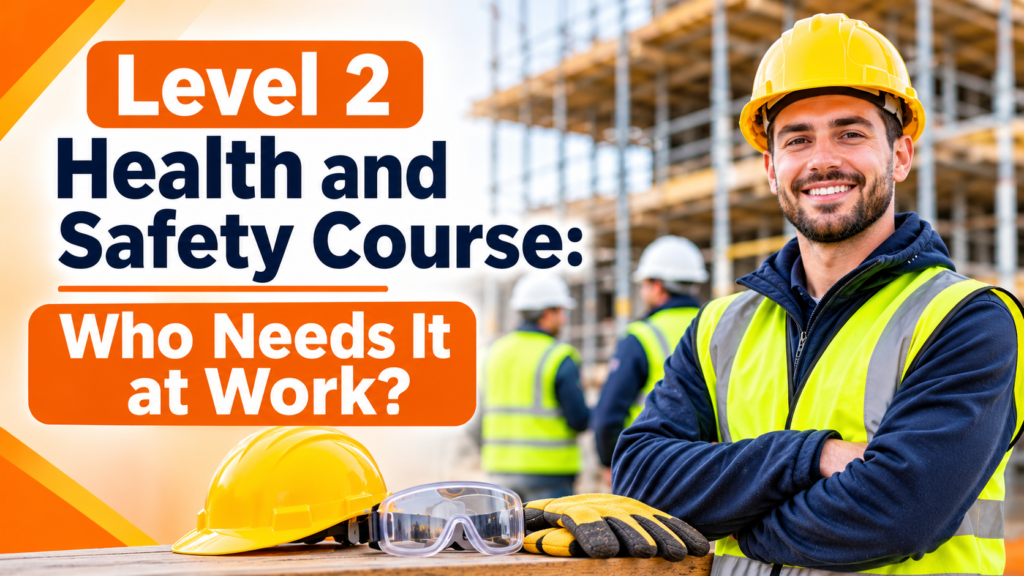
Every job has something that can hurt a person. A wet floor can make you slip. A heavy box can hurt your back. A loose wire can give you a shock. People can stop most of these accidents when they know what to look for and what to do. That is why so many workers and bosses in the UK look for a level 2 health and safety course. This course teaches the basic rules of staying safe at work in plain steps that anyone can follow. You do not need to know anything about safety before you start.
In this guide, you will learn what the course covers, what the law asks from bosses and workers, and who should take it. You will see how it differs from Level 3, IOSH, and NEBOSH courses, so you can pick the right one for your job. At the end, you will find clear answers to the questions that people ask most.
What Does the Course Cover?
The course gives you the basic skills to spot danger and stay safe at work. Each training centre plans its lessons in its own way, but most centres teach the same main topics.
The Main Topics
Here are the topics that most courses include. Each one links to a danger that workers meet in many jobs.
- Hazards and risks: A hazard is anything that can hurt you, such as a wet floor or a sharp tool. A risk is the chance that the hazard will hurt someone. You learn to spot both and decide what to do about them.
- Risk checks: A risk check is a walk around the workplace to find dangers and plan how to stop them. Bosses use these checks to keep workers safe, and you learn the steps.
- Accidents and reports: You learn what to do when someone gets hurt and how to fill in an accident book. You also learn which serious accidents the boss must report to the Health and Safety Executive (HSE).
- Fire safety: You learn what starts a fire, how to read fire signs, and how to leave a building in a calm and safe way.
- Lifting and carrying: You learn how to lift a heavy load without hurting your back or neck.
- Slips, trips, and falls: These are among the most common accidents at work. You learn how to keep floors, stairs, and walkways clear.
- Safety gear: You learn when to wear gloves, hard hats, boots, or eye guards, and how to check that they work.
- Chemicals and machines: You learn to read warning labels and to use tools and machines in a safe way.
How the Course Works
Course length and style change from one centre to the next, so check the details before you book.
Many courses run for about one day. You can learn in a classroom, in a live online class, or on your own with an e-learning course. At the end, you sit a short test with multiple-choice questions. If you pass, you get a health and safety certificate UK employers know, and you can show it to your boss or to a new employer. Many centres teach the Level 2 Award in Health and Safety in the Workplace. Pick a centre that an awarding body has approved. An awarding body is a group that sets the test and checks the quality of the course.
Employer Duties and Employee Duties
The law in the UK shares the job of safety between bosses and workers. The main law is the Health and Safety at Work etc. Act 1974. The HSE checks that people follow it.
What Employers Must Do
A boss has the biggest part, because the boss runs the place where people work.
- Keep the workplace safe: The building, the tools, and the way of working must not put people in danger. A boss must fix anything that is broken or unsafe.
- Check for dangers: Bosses must look for dangers and plan how to stop them. A business with five or more workers must write down what it finds.
- Give training and information: Bosses must teach workers how to do the job in a safe way and tell them about the dangers they face. This is where workplace health and safety training helps.
- Give safety gear and first aid: When a job needs gloves, helmets, or boots, the boss must supply them for free. The boss must also have first aid items and people who know how to use them. Our guide to first aid courses shows what those people learn.
- Listen to workers: Bosses must talk with workers about safety and hear their worries.
What Employees Must Do
Workers have duties too. Safety works best when everyone does their part.
- Look after yourself and others: Your actions can hurt a co-worker, so think before you act.
- Follow the rules and training: If your boss shows you a safe way to do a task, use it.
- Use tools and safety gear the right way: Wear the gear your boss gives you, and report anything that is broken.
- Report dangers: Tell your boss about a wet floor, a broken guard, or a missing fire sign.
- Leave safety items alone: Do not block fire doors or take guards off machines.
Is the Course a Legal Must?
Many people ask this question, so here is a clear answer.
No law says every worker must hold a Level 2 certificate. The law says bosses must give workers the right training for the job. A Level 2 course is one common way to meet that need. Some bosses ask for it, and some work sites ask for it before you start. Ask your boss which training your job needs.
Who Should Take It?
Almost every worker can learn something from this training. A level 2 health and safety course works well for people who are new to safety training. These groups get the most from it.
- New workers: If you start a job in a shop, warehouse, factory, café, care home, or school, the course shows you how to stay safe from day one.
- Workers in busy or risky jobs: Jobs with lifting, machines, or chemicals carry more chances of injury. The course teaches you how to protect yourself.
- Team leaders and supervisors: If you watch over others, you need to know the basic rules. Many leaders take Level 2 first and then move up to Level 3.
- Small business owners: An owner with a small team must still keep each person safe. The course explains the rules in plain words. It is also a good H&S course for employees that an owner can book for the whole team.
- Job seekers: A certificate on your CV shows an employer that you take safety seriously. It does not promise a job, but it can help you stand out.
Other Training You May Need
This course covers the basics, but it does not replace other training. Some jobs need extra courses.
- First aid: Health and safety training does not make you a first aider. For that, you need a separate course. See the first aid courses to learn the difference between the two main types.
- Food hygiene: Cooks and food workers need food safety training too. Read about the food hygiene course if you work with food.
- CSCS card: Building site workers need a CSCS card, and it comes from a different test. Read about the CSCS card if you work on a building site.
Level 2, Level 3, IOSH, and NEBOSH: What Is the Difference?
These names can look confusing at first. They are all safety courses, but they suit different people.
- Level 2 Award in Health and Safety in the Workplace: This is the starter course. It suits workers in any job who want to learn the basics.
- Level 3 Award in Health and Safety in the Workplace: This is the next step. It suits team leaders and supervisors who look after other people and need to go deeper.
- IOSH Working Safely: This short course comes from the Institution of Occupational Safety and Health (IOSH), a UK group for safety workers. It suits any worker, but it does not sit on the Level system.
- IOSH Managing Safely: This course is for managers and supervisors. It runs longer and shows how to run safety checks and solve problems.
- NEBOSH General Certificate: NEBOSH is the National Examination Board in Occupational Safety and Health. This Level 3 qualification suits people who want a career in safety. It needs much more study time.
If you are new to safety, start with Level 2. Move up when you lead a team or want a safety career.
FAQs
Here are short answers to the questions that people ask most.
Do I have to take this course by law?
No law names this course. The law says bosses must give workers the right training, and a Level 2 course is one way to do that. Ask your boss what your job needs.
Is the test hard?
The test has multiple-choice questions, and the lessons cover what you need. Listen in class, take notes, and try the practice questions. The pass mark depends on the awarding body, so ask your training centre.
How long does the certificate last?
Many Level 2 awards do not have an end date. Still, many bosses ask workers to refresh their training every three years. Ask your boss what your workplace needs.
Can I study online?
Yes. Many centres offer classroom, live online, and e-learning courses. Check that the awarding body approves the test.
Is this the same as first aid training?
No. This course teaches you how to prevent accidents. A first aid course teaches you how to help a person who is hurt.
Learn the Basics and Stay Safe
Safety at work starts with knowing what can hurt you and what to do about it. A level 2 health and safety course gives you that knowledge in plain steps. It helps you protect yourself and the people around you. Check what your job needs, pick an approved centre, and take the first step.
Disclaimer: This blog gives general information. It is not legal or professional advice. Rules and course details can change, so check with the HSE or your training centre.