
Tower Legend BC Game: Complete Gameplay Overview
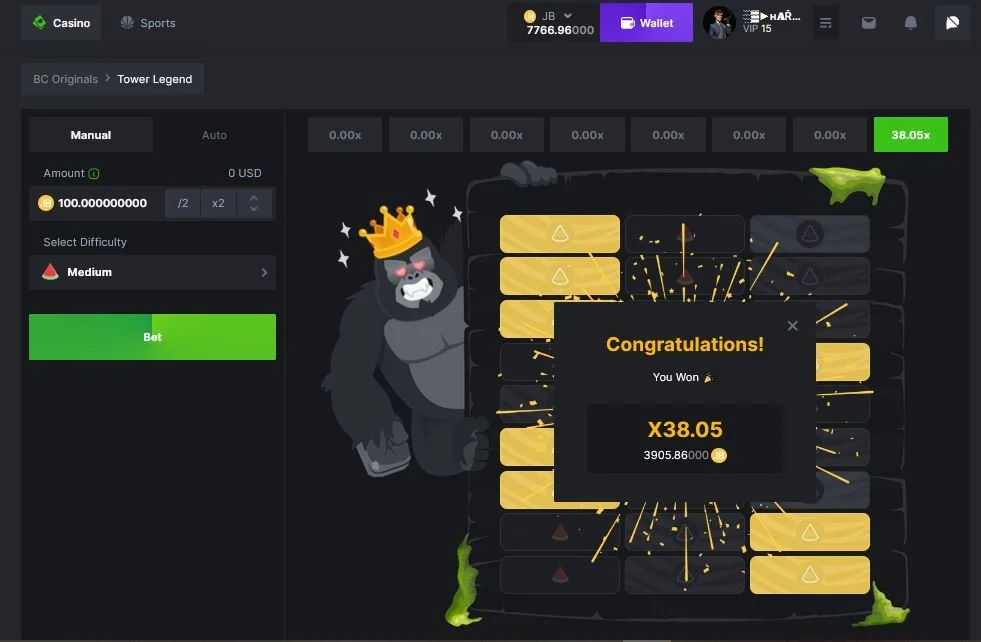
Tower Legend BC Game is a mobile-focused action and progression title where players climb through structured stages and manage resources for survival and advancement. The core loop centers on moving up levels, defeating enemies, and collecting upgrades that improve combat effectiveness. Many players start by reviewing a guide page such as tower legend bc game to understand how progression typically works. Additional reference material is also available at https://bcoriginals.com/tower-legend/. This overview explains major gameplay systems, expected player actions, and practical considerations during runs.
Game Overview and Core Objective
The primary objective in Tower Legend BC Game is to advance upward through a tower by completing each stage and preparing for the next challenge. Each run is built around repeated decisions: which upgrades to prioritize, how to position during fights, and when to conserve resources. Enemies appear in waves or fixed encounters, and their behavior influences how players time attacks and abilities. Success depends on maintaining enough health and damage output to clear the current floor efficiently. Over time, the game rewards consistent performance with improved stats and access to better tools for later levels.
Session Structure and Progression
Gameplay typically follows a step-by-step progression model where the player moves through discrete floors. After clearing a floor, the game usually presents opportunities to apply upgrades that affect future stages. The pacing encourages planning rather than random engagement, since upgrading decisions can impact survivability on harder encounters. If a player fails a stage, the run ends and progress often resets according to the game’s rules. Because of this structure, players generally aim to reduce downtime and build steady power before reaching more difficult floors.
Controls, Movement, and Combat Flow
Combat is driven by player actions such as targeting enemies, using basic attacks, and triggering skills when available. Movement is designed to support continuous engagement, allowing players to reposition during enemy approaches. Targeting and timing matter because enemy patterns can limit safe windows for aggressive play. During fights, players frequently monitor health and threat distance to decide whether to push forward or stabilize. The combat flow is usually smooth, with clear feedback for hits, damage reduction, and defeated enemies.
Attacking and Ability Usage
Players generally rely on a combination of standard attacks and special abilities to handle different enemy types. Basic attacks contribute consistent damage, while abilities can provide burst damage, crowd control effects, or defensive benefits. Ability cooldowns influence decision-making, especially in stages where enemies arrive in clusters. Using abilities too early can reduce options later in a wave, while holding them too long can slow clears. Successful clears often involve using skills at the moment when enemy positioning or numbers create the best value.
Character Builds, Upgrades, and Resource Management
Tower Legend BC Game includes an upgrade system that affects damage, defense, and utility across a run. Players typically choose from multiple upgrade options, and the best choice depends on current stage difficulty and available resources. Resource management is important because some upgrades require trade-offs, such as spending currency that could be used for alternative stat gains. Defensive upgrades can help players survive longer in high-pressure fights, while offensive upgrades can reduce time spent under threat. Many players aim for a balanced approach so that neither damage output nor survivability becomes a limiting factor.
Upgrade Priorities for Different Stages
Early stages often reward damage and accuracy improvements that make clearing faster and safer. As enemies become tougher, defensive upgrades can become more valuable to prevent repeated health loss. Players may also prioritize mechanics that improve consistency, such as increased attack speed or reduced downtime between actions. In later floors, damage thresholds can determine whether a wave is cleared before enemies overwhelm the player. A practical approach is to adjust priorities based on how quickly the player is losing health or failing to eliminate enemies efficiently.
Common Upgrade Elements
Upgrade categories usually include offensive stats, defensive stats, and ability enhancements. Offensive elements can increase damage per hit or improve attack rate, which helps against enemies with high health. Defensive elements can raise maximum health, reduce incoming damage, or improve resilience under sustained attacks. Ability enhancements can strengthen skill effects, shorten cooldowns, or increase effectiveness against groups. Players should review upgrade options during stage transitions and select the set that matches their current combat needs.
- Offense upgrades that increase damage output or attack speed to clear waves faster.
- Defense upgrades that improve survivability when enemies deal sustained damage.
- Utility upgrades that improve control, targeting, or consistency during encounters.
- Ability upgrades that strengthen skills and improve cooldown or effect strength.
Enemy Types, Encounter Patterns, and Threat Handling
Enemies in Tower Legend BC Game generally vary by movement speed, attack style, and resistance to damage. Some enemies pressure the player with frequent hits, while others create barriers through area effects or delayed attacks. Encounter patterns often require players to adapt, because a strategy that works on one floor may fail on the next. Threat handling involves identifying which enemies should be targeted first and managing space during their attacks. When players focus on high-priority targets, they can reduce incoming damage and stabilize each wave.
Wave Management and Positioning
Wave management depends on controlling the flow of enemies so that the player is not surrounded too quickly. Positioning can affect whether enemies cluster in a useful area for damage or abilities. Players often use movement to keep a safe distance while maintaining attack opportunities. If a stage includes ranged or fast attackers, players may need to prioritize defense and short-range damage. The goal is to clear the wave efficiently while limiting damage taken between skill uses.
Boss or High-Pressure Encounters
Higher floors may include boss-like fights or special encounters that emphasize pattern recognition. These encounters can require observing attack sequences and responding with timed movement or ability activation. Damage windows may appear after certain attacks, and players benefit from waiting for those windows instead of attacking continuously. If the player’s build lacks sufficient damage, survivability becomes the main concern until a safe opening appears. When the player’s upgrades are strong, the fight can end more quickly, reducing the chance of repeated mistakes.
Rewards, Progress Tracking, and Practical Tips
Rewards typically come from clearing stages and applying upgrades during run transitions. Progress tracking helps players understand how far they have reached and how their current build performs against higher challenges. The game encourages learning from each run because encounter difficulty increases with tower depth. Practical tips include keeping an eye on cooldown timing, selecting upgrades that match the current stage, and adjusting play style when enemies change behavior. Players who maintain consistent performance usually spend less time in high-risk situations.
How to Make Upgrades Work During Runs
During a run, upgrades should be evaluated based on immediate impact for the next floor rather than only long-term goals. If a player is clearing stages too slowly, offensive upgrades can improve efficiency and reduce exposure time. If a player is taking too much damage, defensive upgrades can stabilize health and prevent early run termination. Ability upgrades can provide the strongest value when they align with the player’s combat rhythm. It is also useful to confirm that chosen upgrades do not create a gap, such as high damage with insufficient defense.
Efficiency and Risk Control
Efficiency is closely related to risk control because slower clears usually mean more time under enemy pressure. Players often reduce risk by using abilities during moments when they can hit multiple enemies or prevent incoming damage bursts. Health management is another factor, since conserving health increases the number of safe actions available later. When the game introduces tougher waves, players may need to play more conservatively until they can establish stable damage output. Consistent decision-making helps prevent sudden losses caused by overcommitting during high-pressure patterns.
Performance Considerations and Player Experience
Tower Legend BC Game is designed for repeatable runs, so performance and responsiveness can affect player success. Players may benefit from stable input timing, especially during fast encounters and skill activations. Visual clarity also matters, since enemy attacks and movement cues must be distinguishable to avoid mistakes. Network conditions may influence online features if they exist, but core gameplay typically focuses on single-player progression mechanics. Overall, the experience is shaped by how smoothly the player can interpret enemy behavior and apply upgrades effectively.
Balancing Speed and Survival
A common challenge for players is choosing between faster clears and safer play. Builds that prioritize offense can reduce time spent fighting, but they can still fail if defense is too low for later stages. Builds that prioritize defense can extend survivability, but they may increase time spent dealing damage and raise the chance of being hit repeatedly. The best balance depends on current progression and the types of enemies encountered. Players can often refine this balance by observing where health drops fastest and adjusting upgrades accordingly.
Learning Curve Across Tower Depth
The learning curve generally grows as floors become more demanding and enemy patterns evolve. Early runs help players identify basic combat timing, while later runs require more precise handling of threats. Players who experiment with upgrade combinations can discover which stats improve reliability in difficult stages. Over multiple attempts, the player’s decision-making becomes faster and more accurate, which supports higher success rates. Continued practice helps players maintain a consistent approach while still adapting to each encounter’s specific demands.