
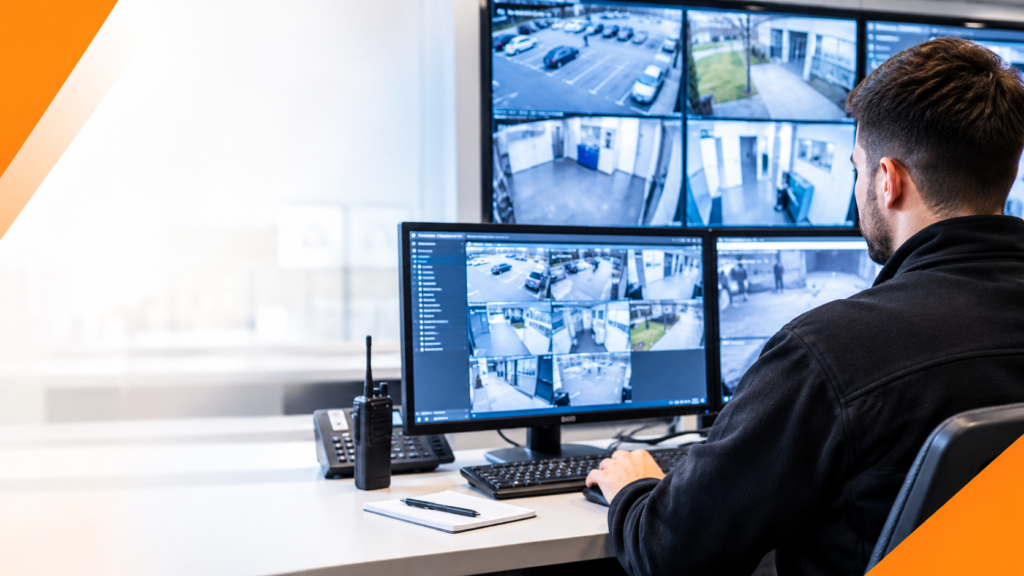
Thinking about a career as a CCTV Operator in the UK? Whether you’re switching careers, entering the security industry for the first time, or just curious about what the job actually involves, this guide breaks down the role in plain English — what CCTV Operators (sometimes called Control Room Operators) do day to day, where they work, what training is required, and what a realistic career path looks like.
This guide is written for beginners. If you’re researching how to become a CCTV Operator, comparing training providers, or trying to understand the difference between working “in-house” and needing an SIA CCTV Licence, you’re in the right place. Bright Learning Centre put this guide together to give people a clear, honest starting point before making any training or career decisions.
Table of Contents
A CCTV Operator is someone who monitors closed-circuit television (CCTV) systems to help keep a site, building, or public area safe. This is formally known in UK security regulation as Public Space Surveillance (CCTV) — a licensable activity under the Private Security Industry Act 2001.
In simple terms, a CCTV Operator watches camera feeds, spots incidents or suspicious activity, and passes information to the right people — whether that’s on-site security staff, management, or the police. It’s important to understand from the outset that a CCTV Operator is not a police officer and does not have police powers. The role is about observing, recording, reporting, and responding according to agreed procedures, not making arrests or enforcing the law directly.
The day-to-day reality of the job is less dramatic than it sounds on TV, but it requires genuine focus and attention to detail. Typical responsibilities include:
A large part of the job is about clear, accurate reporting. A CCTV Operator needs to separate what they actually saw from what they assumed or were told — this distinction matters if footage or a report is ever used in an investigation.
CCTV Operator roles exist across a wide range of settings in the UK, including:
Some CCTV Operators work “in-house,” meaning they’re employed directly by the organisation that owns the site. Others work for security companies that provide monitoring services under contract to different clients. This distinction matters for licensing, which is explained further below.
You don’t need a specific academic background to become a CCTV Operator, but certain skills make a real difference in how well someone performs in the role:
These are skills that can be developed through training and experience — they’re not something you need to already have before starting out.
This is one of the most common questions from people considering this career, and it’s important to get the facts right.
According to official UK government guidance, you need a Public Space Surveillance (CCTV) licence if you are working under a contract for services and you use CCTV to identify people or monitor their activities in order to:
This includes both live monitoring and reviewing recorded footage for these purposes.
You generally do not need an SIA licence if you are working “in-house” — meaning you are employed directly by the organisation whose premises you’re monitoring, rather than through a security contracting company. In short, whether a licence is required depends on both your employment arrangement (in-house versus contracted) and the specific duties you carry out, so the same job title can sometimes fall on either side of the licensing line depending on how the role is set up. If you’re ever unsure whether your role requires a licence, the safest approach is to check directly with the SIA or refer to official GOV.UK guidance.
Where a licence is required:
It’s worth noting that SIA requirements can be updated over time, and the SIA has recently consulted on proposed changes to licence-linked qualifications, including updated content for Public Space Surveillance (CCTV) training. As of now, these are proposals under consultation — always verify current requirements through official SIA guidance before making training decisions.
If you’re starting from scratch, here’s a general step-by-step outline:
This is a general pathway, and exact steps can vary depending on the employer and whether the role is in-house or contracted.
SIA-approved Public Space Surveillance (CCTV) training is built around a structured knowledge and skills specification. Broadly, it covers areas such as:
If you’re looking for a CCTV Operator course UK-wide, it’s worth checking that the provider delivers training against the current SIA-approved specification, since this is what your licence application will ultimately be based on. At Bright Learning Centre, CCTV training follows the current SIA-approved specification, giving learners a structured introduction to the knowledge and practical skills required before applying for a licence. Our team can talk you through course dates, format, and what to expect before you enrol. As training specifications are reviewed by the SIA from time to time, we always encourage learners to check the latest official guidance alongside their course.
Like many entry-level security roles, CCTV Operator work can lead to further opportunities over time, depending on experience, additional training, and employer needs. Possible directions include:
It’s worth being realistic here: progression isn’t guaranteed and depends on factors like experience, additional qualifications, local job availability, and individual performance. This guide does not promise specific career outcomes, salary levels, or job placement — those depend on the individual, the employer, and the wider job market at the time.
Myth: CCTV Operators have police-style powers.
False. CCTV Operators observe, record, and report — they do not have the authority to arrest, detain, or enforce the law.
Myth: The job is just “watching screens.”
It involves more than passive watching — active monitoring, prioritising what matters, accurate reporting, and clear communication are all central to the role.
Myth: Anyone can do CCTV work without any training.
Where a licence is legally required, formal SIA-approved training and a licence application are necessary before you can work in the role.
Myth: CCTV Operators can access footage however they like.
Data protection rules apply to CCTV footage, and operators must follow strict procedures around how footage is stored, accessed, and shared.
There’s no single answer to this — it depends on what you’re looking for. Some genuine advantages of CCTV Operator work include:
At the same time, it’s fair to acknowledge some realistic considerations:
Whether it’s “a good career choice” really depends on your own priorities, learning style, and what you want from a role in the security sector.
It depends on your working arrangement. If you’re working under contract for a security company and monitoring the public for guarding purposes, you’ll generally need a Public Space Surveillance (CCTV) licence. In-house employees monitoring their own employer’s premises may not need one, but this can vary — always check current guidance.
Course length varies by provider, but Public Space Surveillance (CCTV) training is typically delivered over a short, structured course. Contact your chosen training provider for specific course dates and duration.
No. Door Supervisor and CCTV Operator licences cover different licensable activities, with separate knowledge and skills specifications, although some general security knowledge overlaps.
Yes, this is generally considered an entry-level role in the security sector, accessible through the required training and licensing route rather than requiring prior experience.
The SIA has consulted on proposed updates to licence-linked qualifications, including Public Space Surveillance (CCTV). These are proposals under consultation, not confirmed changes — always check official SIA guidance for the latest position.
Current entry requirements differ by licence type. It’s best to confirm exact prerequisites for the specific licence you’re applying for through official SIA guidance or your chosen training provider.
Many roles involve evenings, nights, weekends, and public holidays, depending on the employer and the site being monitored. Shift patterns vary widely across the industry, so it’s worth checking working hours with individual employers.
CCTV monitoring specifically involves observing surveillance footage for public safety purposes, while general security guarding covers a broader range of physical site security duties. They are separate licensable activities under SIA regulation.
Costs vary between training providers and can depend on course format and location. Contact training providers directly for current pricing.
Becoming a CCTV Operator can be a practical way into the UK security industry, offering a structured route through SIA-approved training and licensing, along with transferable skills in observation, reporting, and communication. That said, it’s a role with real responsibilities — CCTV Operators observe, record, and report according to procedure, rather than acting as law enforcement, and outcomes like career progression or pay will always depend on the individual, the employer, and wider circumstances.
If you’re planning to start your CCTV Operator career, understanding the SIA CCTV Licence process matters as much as the training itself. Bright Learning Centre can help you understand the current requirements while encouraging learners to follow the latest official SIA guidance.
This article is for general informational purposes only and does not constitute legal, licensing, or career advice. SIA licensing requirements and training standards may change over time, so readers should verify the latest official requirements before making training or career decisions. This guide does not guarantee specific salary, employment, or career outcomes.
Readers are encouraged to consult these official sources directly for the most current and complete licensing information.