
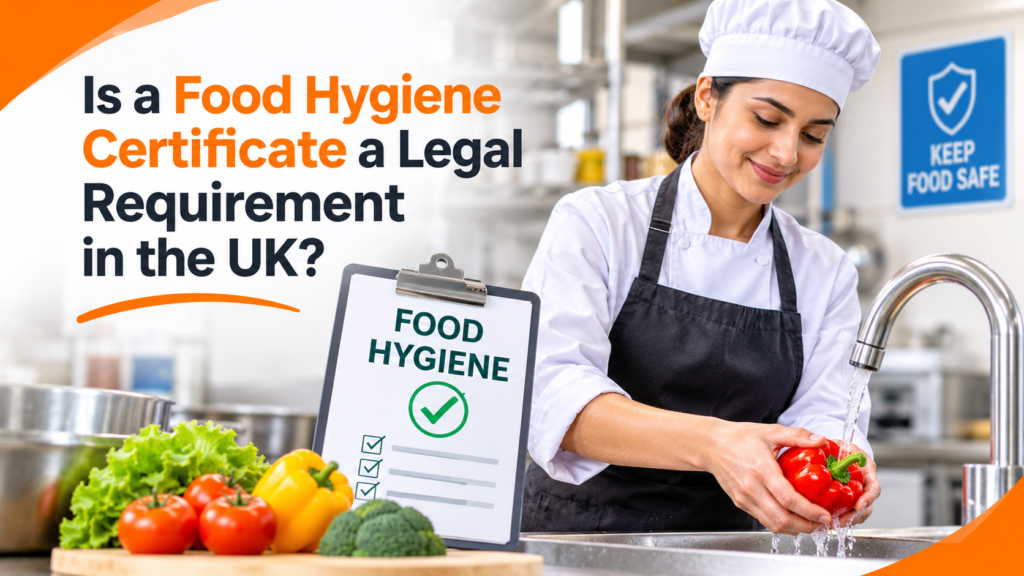
If you are planning to work in a restaurant, café, takeaway or catering business, you may wonder whether you need a food hygiene certificate before starting work. Many employers ask for one, and some job adverts list a Level 2 Food Hygiene Certificate as a requirement.
But is food hygiene certificate a legal requirement in the UK?
The short answer is no. UK food hygiene law does not require every food handler to hold a specific certificate, such as a Level 2 qualification. However, food businesses must make sure their staff receive suitable food hygiene instruction, supervision and training for the work they carry out.
A food hygiene certificate is a common way to show that someone has completed training and understands basic food safety practices. It can also help when applying for jobs in the food industry.
In this guide, we explain what the law says, who needs food hygiene training, the difference between training levels and how to choose a suitable course.
Table of Contents
Food safety is an important responsibility for every business that prepares, stores, serves or sells food.
Regulation (EC) No 852/2004 on the hygiene of foodstuffs sets out important training requirements for food businesses. Annex II, Chapter XII explains that food handlers must receive suitable supervision, instruction and/or training in food hygiene based on the work they do.
The law also requires people responsible for developing and maintaining food safety procedures based on HACCP principles to receive suitable training.
In simple terms, this means:
The Food Standards Agency (FSA) provides guidance on food hygiene training for food businesses.
According to its guidance, food handlers do not have to hold a food hygiene certificate to prepare or sell food. However, they must receive suitable training and supervision.
You can read the official guidance here: Food Standards Agency – Food Hygiene Training
No. A Level 2 Food Hygiene Certificate is not a universal legal requirement in the UK.
However, Level 2 training is widely recognised as a suitable starting point for people who prepare or handle open food.
Many employers prefer candidates with this qualification because it shows that they have learned the basic rules of food safety.
There are three common reasons why employers may ask for a certificate:
It is important to understand the difference between a legal requirement and an employer’s policy. A business can ask its employees to hold a particular certificate even when the law does not require that specific qualification.
Anyone working with food in a food business needs suitable food hygiene knowledge and training for their duties.
This includes people who prepare food, serve customers, store ingredients or work in food production.
Here are some examples of workers who may need food hygiene training.
Chefs, cooks and kitchen assistants handle ingredients and prepare meals. They need to understand safe food preparation, cooking temperatures, cleaning and the prevention of cross-contamination.
Catering workers prepare and serve food at different locations. They need to understand safe food storage, transportation, temperature control and personal hygiene.
People working in takeaways handle ingredients, prepare meals and serve customers. Food hygiene knowledge helps them keep food safe during preparation and service.
Employees working in supermarkets, bakeries and food shops may handle packaged or unpackaged food. Their training should match the tasks they perform.
Owners and managers have responsibility for food safety in their businesses. They need suitable knowledge to manage staff, maintain hygiene standards and oversee food safety procedures.
The level of training should match the risks and responsibilities of each role.
Food hygiene courses are available at different levels. Each level is designed for people with different responsibilities in the food industry.
Understanding these levels can help you choose suitable training.
Level 1 is an introductory course for people who need basic food hygiene awareness.
It may be suitable for:
The course introduces personal hygiene, cleanliness and ways to prevent food contamination.
Level 2 is commonly chosen by people who prepare, cook, serve or handle open food.
It may be suitable for:
Topics usually include food contamination, safe storage, temperature control, cleaning, personal hygiene and food safety practices.
Level 3 is generally designed for supervisors, team leaders and people responsible for managing food safety.
It may be suitable for:
The training focuses on managing food safety, supervising staff and maintaining hygiene procedures.
These levels are commonly used training categories rather than specific qualification levels set by food hygiene legislation. Always check the course content and whether it meets your employer’s requirements.
Yes. You can legally work in a kitchen without holding a food hygiene certificate, provided the food business meets its legal training and supervision responsibilities.
However, this does not mean you can start handling food without receiving any instruction.
Your employer must make sure you understand the hygiene rules that apply to your work.
For example, before preparing food, you may need instruction on:
Some employers may require you to complete a Level 2 course before starting work. Others may provide initial workplace training and arrange further learning afterwards.
If you are applying for a kitchen or catering job, check the employer’s requirements before accepting the position.
A food hygiene course teaches the basic knowledge needed to handle and prepare food safely.
The topics depend on the course level, but common areas include the following.
You learn why handwashing, clean clothing and good personal hygiene are important when working with food.
The course explains how bacteria, chemicals and physical objects can contaminate food and how to reduce these risks.
You learn how to store food safely, follow temperature guidelines and keep raw and ready-to-eat food separate.
You understand the difference between cleaning and disinfecting, along with the importance of keeping kitchens and equipment hygienic.
You learn why food allergens must be identified and managed to protect customers with food allergies.
The training covers practical steps for preparing, cooking and serving food safely.
These skills are useful for anyone planning to work in a restaurant, café, takeaway, catering company or other food business.
Choosing a suitable food hygiene course depends on your job, experience and employer’s requirements.
Before enrolling, consider the following points.
Choose a course that matches your responsibilities. Level 1 may suit basic food hygiene awareness, while Level 2 is commonly used for food handlers who prepare or handle open food.
Check that the course covers important areas such as personal hygiene, food contamination, temperature control, cleaning and allergens.
Find out who provides the certificate and whether it is a regulated qualification or a course completion certificate. Ask your employer whether they accept it.
Online training can be useful for people who want to study around work commitments. Classroom training may suit learners who prefer face-to-face teaching.
Look at the provider’s course information, learning outcomes, assessment process and certificate details before enrolling.
If you are looking for food hygiene training in Leicester, you can explore the Bright Learning Centre Food and Hygiene Course.
Review the course information to understand what is covered and whether it matches your learning needs and job requirements.
There is no general legal expiry date for a food hygiene certificate under the main food hygiene training rules.
However, this does not mean that food handlers never need further training.
Food safety knowledge should be updated when:
Some employers and organisations recommend refresher training every three years. This is a common recommendation rather than a universal legal expiry rule.
Always check your employer’s policy and the requirements of the course provider.
No. UK food hygiene law requires suitable food hygiene training, instruction and supervision. It does not require every food handler to hold a specific certificate.
No. Level 2 is not a universal legal requirement. However, it is widely recognised as suitable training for people who prepare or handle open food.
Yes. You can work without a certificate, provided your employer gives you suitable training and supervision. However, individual employers may make a certificate a condition of employment.
Level 2 training is commonly recommended for chefs, cooks, kitchen assistants, catering workers and other employees who prepare or handle open food.
There is no general legal three-year expiry period. Some employers recommend refresher training every three years, but their own policies and course requirements may differ.
Level 2 is generally intended for food handlers who prepare or handle food. Level 3 is designed for supervisors and managers who have responsibility for food safety and other staff.
Yes. Online food hygiene training is available through different providers. Before enrolling, check the course content, assessment method and whether the certificate is accepted by your employer.
Yes. Food business owners and managers must have suitable food safety and hygiene knowledge and training for their responsibilities. The law does not specify that every owner must hold a Level 3 certificate.
A food hygiene certificate is not a universal legal requirement in the UK, but suitable food hygiene training is essential for people working in food businesses.
The law focuses on making sure food handlers receive the right instruction, supervision and training for their jobs. Level 2 is a common choice for people who prepare or handle open food, while Level 3 is generally suitable for supervisors and managers.
If you are planning to work in a restaurant, café, takeaway or catering business, learning the basics of food safety can help you understand your responsibilities and prepare for workplace requirements.
Bright Learning Centre offers food and hygiene training for people interested in developing their food safety knowledge. Visit the Bright Learning Centre Food and Hygiene Course to explore the course information and decide whether it is suitable for your learning needs.